Read This First
Start Here
One page, in order, so nobody has to guess what to read next. Six steps. You can do all of it yourself, and none of it costs anything.
One page, in order, so nobody has to guess what to read next. Six steps. You can do all of it yourself, and none of it costs anything.
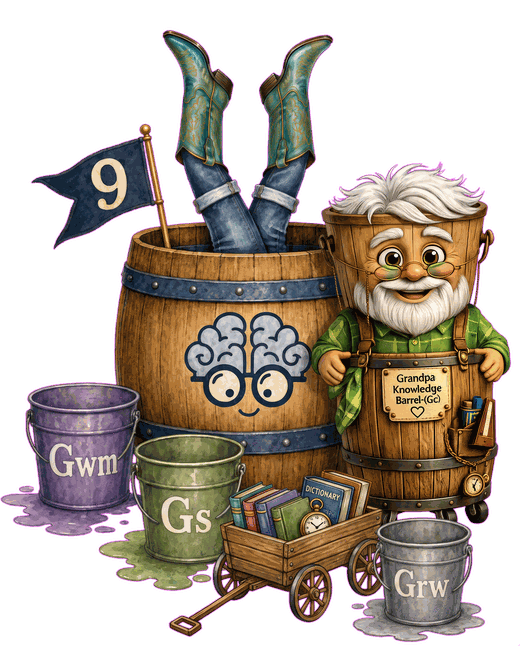
Two barrels, seven buckets, one picture of how a brain works.
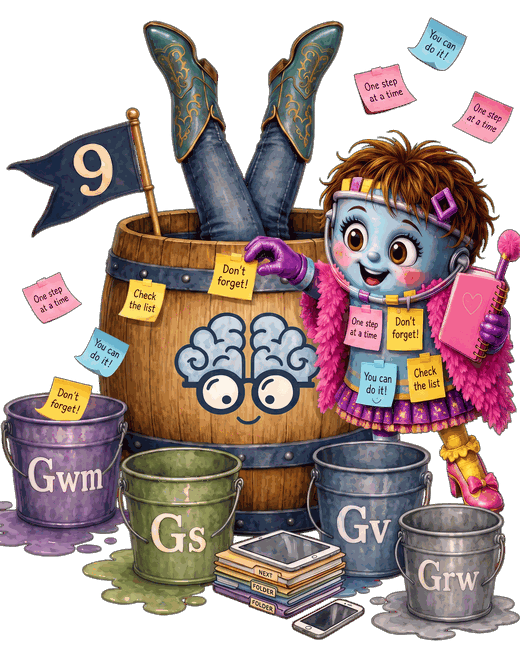
Your child’s brain does not hold water. Buckets and Barrels uses water as a picture of how cognitive processing works. Picture nine vessels, two barrels and seven buckets, each keeping the real name and letters from the evaluation. Some run full, some run low, and some leak, and nobody gets to choose the volume. Once you can see where the water stops, you stop punishing what’s hard and start celebrating what’s strong.
Everyone has G’s. They are as individual as fingerprints.
Every other vessel leans on these two. When both are full, everything runs smoother. When one runs low, there is struggle. When both run low, the struggle is real, and it shows up early.
Everything already learned: vocabulary, facts, patterns, and lived experience. A full library connects the past to the present. It doesn’t just know things, it links them.
In Bucket Hollow, this is Grandpa’s barrel: “There’s a story behind that.”
The system the brain reaches for when there’s no script, no manual, and no past experience to lean on. It spots patterns, connects dots, and adapts on the fly.
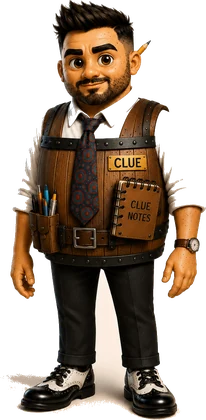
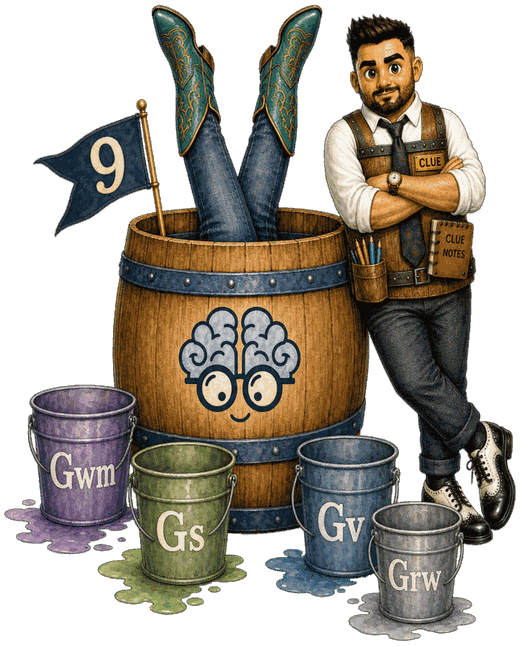
In Bucket Hollow, this is Uncle Clue: “Let’s look at the clues.”
Each bucket handles one specific job. A leak in any one of them changes how school feels, and each leak has its own ramps.
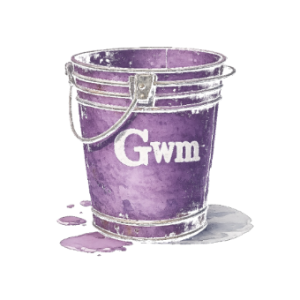
Holds and juggles what’s in use right now. Small counter: give three instructions and the second and third can fall right off.
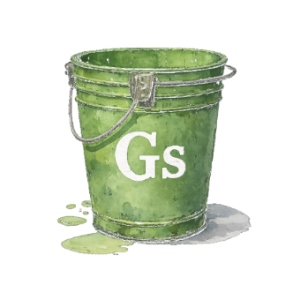
How fast routine mental work moves. Speed of output, not depth, effort, or intelligence.
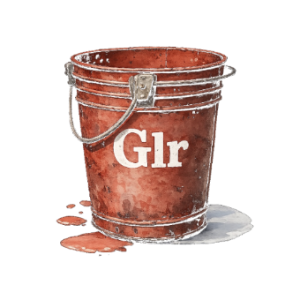
The information usually got filed. It’s the clerk who can’t find it under pressure, then hands it over in the car an hour later.
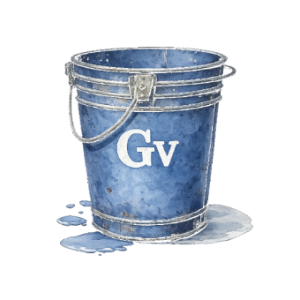
Pictures, rotates, and reasons with images and space. A leak here is spatial, not conceptual. Grade the math, not the margins.
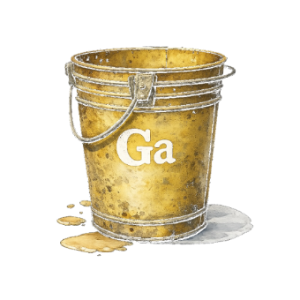
Separates and blends the sounds inside words and fishes speech out of noise. The foundation reading is built on.
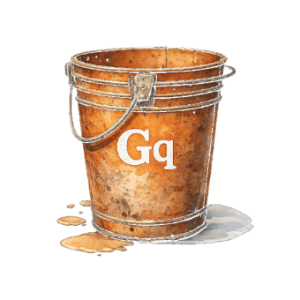
Number sense, math facts, time, and measurement. Math is a staircase. Miss a stair and the child gets stuck on the last solid one.
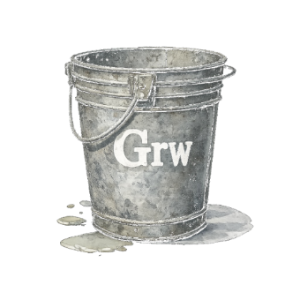
Built brick-by-brick for decoding, spelling, and writing, stacked directly on top of the sound sorter.
Here is the most important move in the whole system. When a bucket is leaky or running low, the brain quietly borrows capacity from a full barrel to cover the gap. A full library predicts the words a leaky sound sorter didn’t catch. A full figure-it-out system re-derives the math facts a leaky math bucket can’t recall.
That is why a real weakness can stay invisible for years. The child is compensating so well that nobody sees the effort underneath, right up until the academic demand outgrows the barrel’s ability to cover. Then the child who was “fine until this year” suddenly hits a wall: third grade, middle school, or a change of schools.
Recites everything perfectly, until the assignment says “solve it your way” and the memorized scripts run out. A full library covering a leaky figure-it-out system.
Builds, solves, and adapts to anything, then goes silent when the conversation turns wordy. A full figure-it-out system reading the room instead of the words.
Can’t recall 6+7, so the brain figures 6+6=12, plus one. Right answer, triple the fuel, and slow enough to fail the timed test.
A full library predicts words from how sentences flow, until texts get too dense to guess and the decoding gap finally shows.
Narrates their way through anything visual, until geometry proofs and uncaptioned maps can’t be talked through anymore.
Adults say they’re “careful” and “take their time.” Kinder than “lazy,” but it still hides the massive tax they pay on routine work.
The fix is simple to say and powerful to do: watch your child (or yourself) in both scripted and unscripted moments, so you can see how hard the brain is actually working behind the scenes.
Meltdowns over “easy” homework. Refusing to start. Tears at the kitchen table. Saying “I don’t know” over and over. From the outside it looks like defiance or laziness. It isn’t either one. It’s what happens when the demand outruns the supply and the water stops.
The behavior is the signal, not the problem. When you read it as a gauge instead of a character flaw, your response changes from correction to connection: reduce the overwhelm, provide a starting point, then step back.
And no one needs a label like “lazy” to get help. They need ramps and ladders, not a label: structural supports matched to their specific wiring.
“Stop punishing what is hard; start celebrating what is strong.”
One number, explained once, so the rest of the report stops being a wall.
If you are holding an evaluation, almost everything in it comes back to one kind of number. Nobody is born knowing how to read it, and the meeting where it was explained probably moved fast.
So before you go further: the next page does that one job. What the number means, which score to enter in the tools further down this page, and exactly where to find it on your own report.
If you do not have an evaluation, skip to step 3. The Fill Finder does not use scores at all.
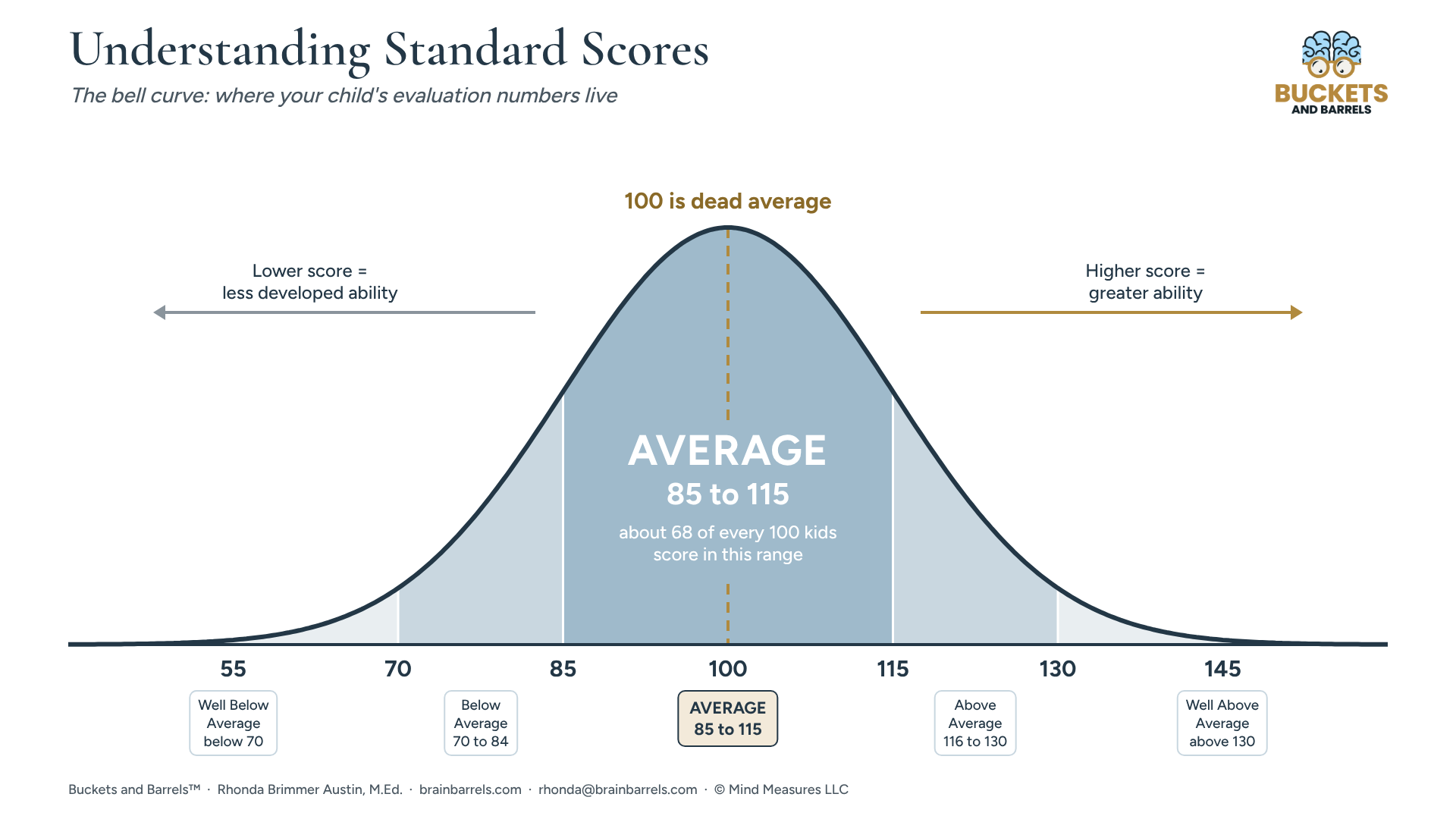
About 68 out of every 100 people score between 85 and 115. That is why the average range is so wide.
Two ways in, one clear picture. One of them needs no scores at all.
No test scores? No problem. You’ll answer 100 plain questions about what you notice in everyday life: at the kitchen table, at school, or in yourself. Set aside about 20 minutes, or pause and return later; your answers save automatically.
The result is a reflection-based Pattern of Strengths and Weaknesses, not a cognitive score or assessment.
Kids can take their own version, the Fill Finder for Kids, rating each sentence with stars.
Take the Fill Finder →This separate tool accepts only cognitive scores reported in a formal evaluation. It turns those scores into a plain-language visual for education and discussion.
It does not replace the evaluator’s interpretation, diagnose a condition, or determine eligibility. Do not enter Fill Finder results here.
Open the Individual Profile →The Fill Finder is free, and it stays free. It sorts what you already notice into the nine and hands the list back to you. Seeing the whole picture, and knowing what to do with it, is inside the course.
The part that matters, and the part most people are never told.
Here is the part that matters. Six of the nine do not get bigger. Gc, Grw and Gq grow, and only when knowledge is gained in that exact area: reading grows the literacy bucket, math grows the number bucket, learning and experience fill the library. The other six are the size they are.
That is not bad news. It is the news that lets you stop waiting.
A parent who believes a small bucket will fill on its own waits. They wait through second grade, then third, and somewhere in there they start to wonder whether the child is trying. Nothing was coming. The waiting was the problem.
What you do instead is build ramps and ladders. You change what the task asks for, or you give a different way in, so the small bucket is not the thing standing between your child and the work.
That bucket is small. Here is the ramp.
One guide per vessel, in plain language: what it does, what a leak looks like, and the exact words to use with teachers and in IEP meetings. Each guide ends by introducing that vessel’s character from the Bucket Hollow Bunch.
Open the Clarity Guides →See how the buckets affect each other, and where one weak link slows everything downstream. This is what turns a profile into a plan: fix the bottleneck first.
No scores are used. It does not identify a cognitive deficit or determine why a behavior occurs.
See what is in the course →A two-minute guide for every vessel is free, right here. The full guides, in print and in audio, and the Bottleneck Finder, are inside the course.
The Bucket Hollow Bunch, and the words they hand you.
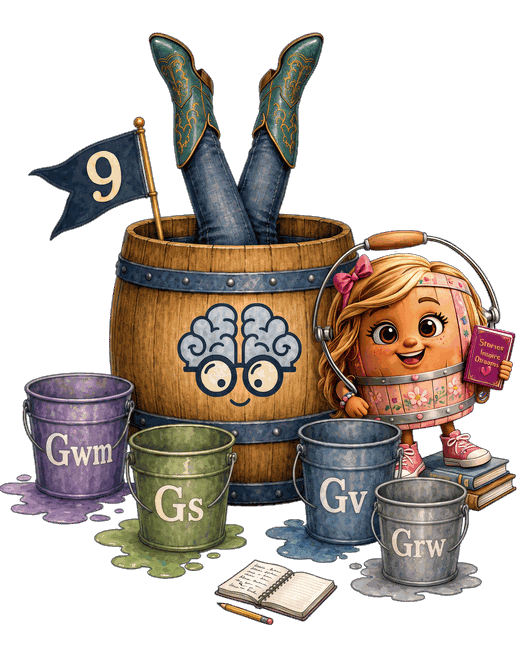
Every vessel has a friend. The characters give your child a warm, no-shame way to understand their own brain, “that’s just my memory bucket, it needs a little help,” and give you the words to explain it kindly.
The names are for the hard moments, not for a lesson.
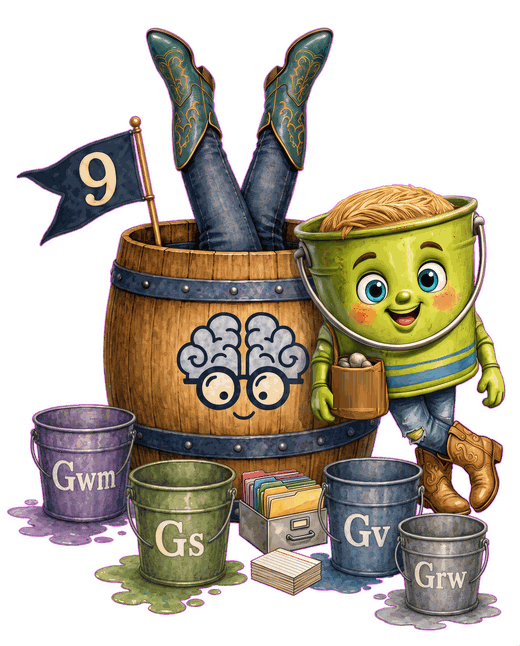
When a child has a name for what just happened, the moment stops being about them. It is Millie’s countertop being full, not a child who does not listen. It is Finn taking a while to find the file, not a child who forgot on purpose.
Out loud, it sounds like this:
Nobody is in trouble. Everybody knows what happened. You are already moving on.
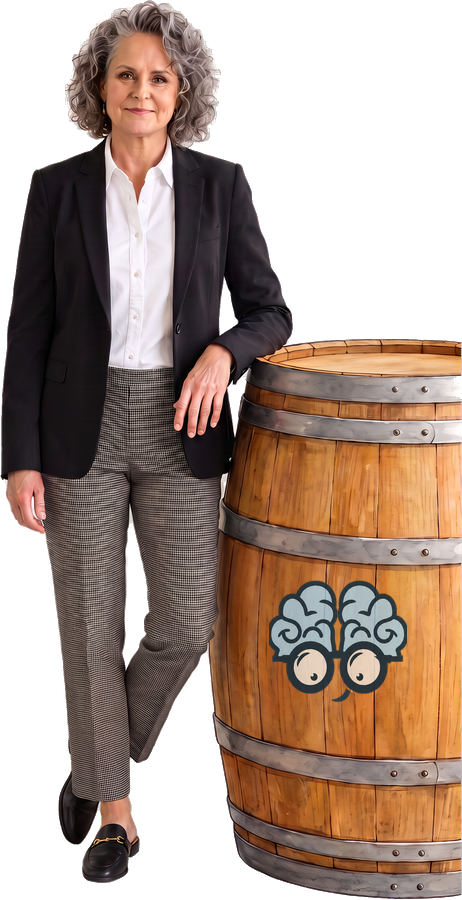
Who wrote all of this, and why.

I am Rhonda Austin, an educational diagnostician, and I have spent thirty years in education, most of them writing evaluations like the one you are holding.
I built this because of a conversation in a dentist’s office. A woman told me her daughter had been tested, and that she had learned more in three minutes of me explaining it than in the full hour the team spent going through the report.
That should not be true. It is true a lot.
Everything on this page is free and you can do all of it yourself. If it turns out you would rather have someone walk it with you, that is what I am for. Thirty years in education, spent on reading yours.

Why the legs? Because I don’t stand outside the bucket with a clipboard. I climb in.