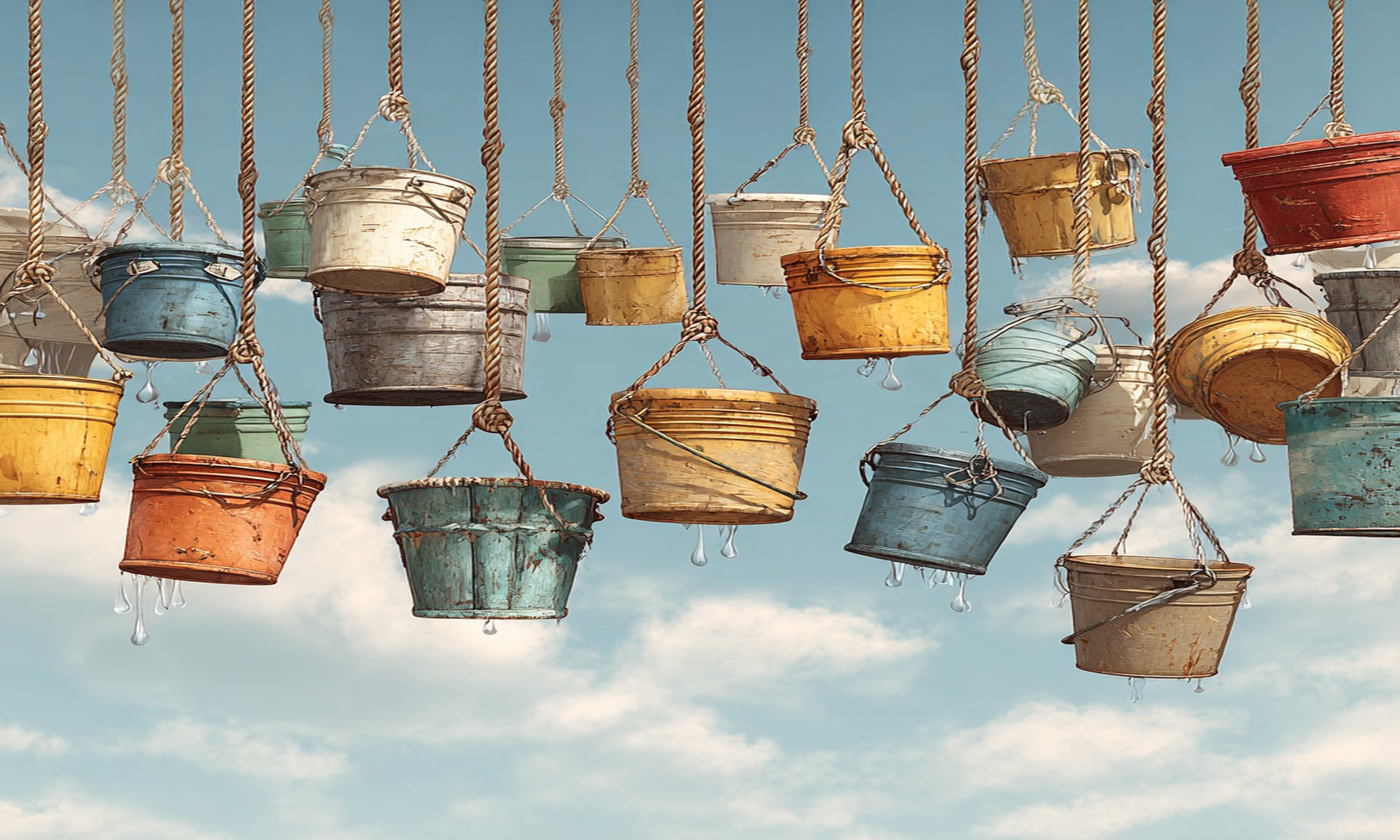
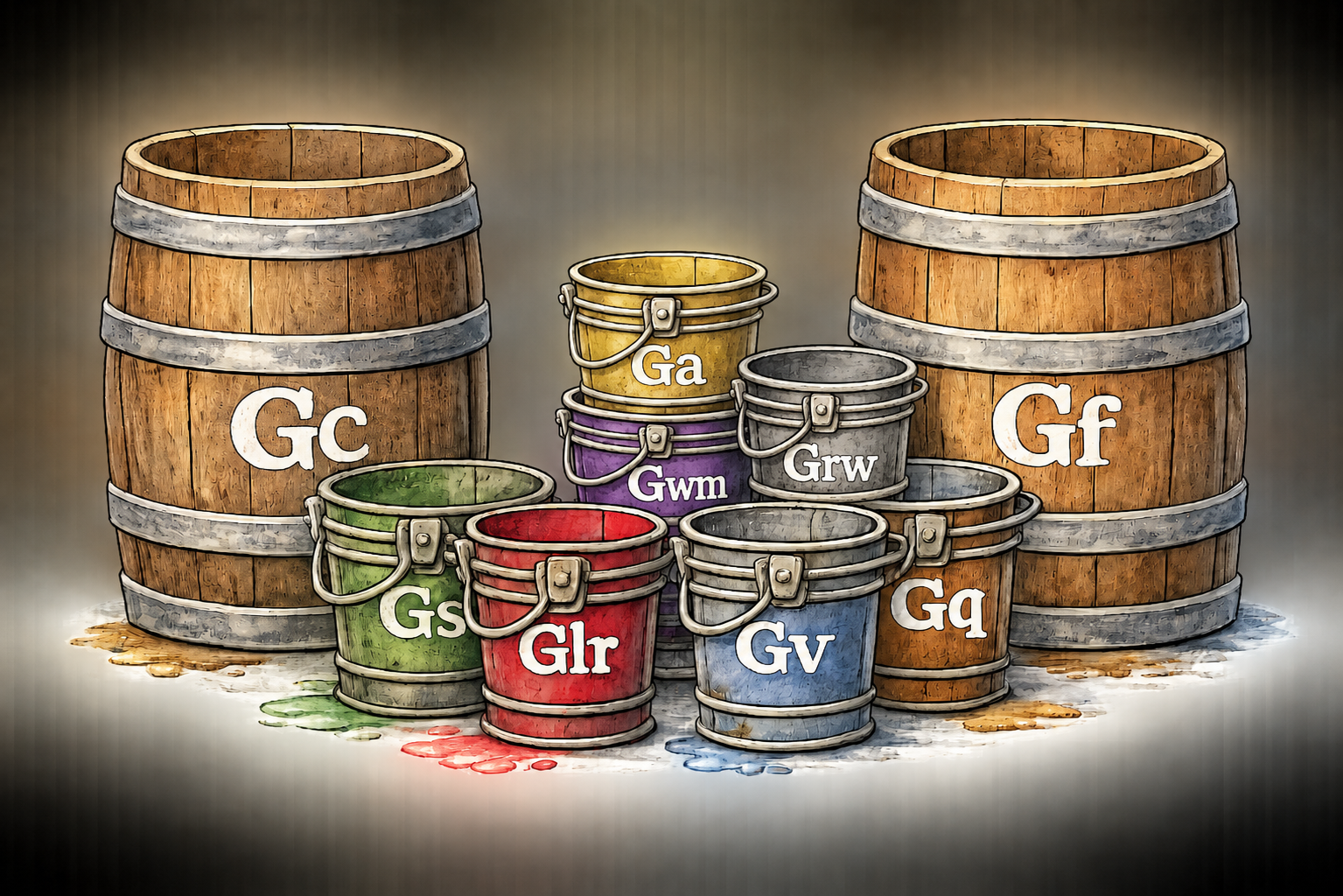
Think of the brain as a set of buckets and barrels. Each one holds a different kind of thinking: attention, memory, processing speed, reasoning. When one leaks or overflows, learning gets harder in ways that look like “won’t” but are really “can’t yet.” This tool gives families plain language for noticing and discussing those patterns.

Everyone has G’s. They are as individual as fingerprints, and nobody chose the volume.
Want the full walk-through? See the Buckets and Barrels Brain page.
Get to Know Each One
Each vessel holds a different kind of thinking. Step through them one by one: what it does, and what it means in plain language.
Your Path Through the Tool
Two ways in, one clear profile. See the Hub for all the links.
The Fill Finder Questionnaire (Organizes everyday observations)
START HERENo test scores? No problem. You'll answer 100 plain questions about what you notice in everyday life: at the kitchen table, at school, or in yourself. Plan for about 20 minutes, or pause and return later. The result is a reflection-based Pattern of Strengths and Weaknesses, not a cognitive score or assessment.
Already have scores from a formal cognitive evaluation? Use the separate Individual Profile. Do not enter questionnaire results there.
Kids can take their own version, the Fill Finder for Kids, rating each sentence with stars, a fun window into what they understand about themselves.
Bucket and Barrel Individual Profile (Start here if you have your cognitive scores from an evaluation)
THE HUBThis separate tool accepts only cognitive scores reported in a formal evaluation. It turns those scores into a plain-language visual for education and discussion; it does not replace the evaluator’s interpretation, diagnose a condition, or determine eligibility.
The Bottleneck Finder (No score necessary, just your opinions)
See how the buckets affect each other, and where one weak link slows everything downstream. This is what turns a profile into a plan: fix the bottleneck first.
Clarity Guides
GO DEEPEROne guide per vessel, in plain language: what it does, what a leak looks like, and the exact words to use with teachers and in IEP meetings. Each guide ends by introducing that vessel’s character from the Bucket Hollow Bunch.
All of these tools live in one place, with the buttons to open each one.
Go to The Hub to Open Them →Meet the Bucket Hollow Bunch
Every vessel has a friend. The characters give your child a warm, no-shame way to understand their own brain (“that’s just my memory bucket, it needs a little help”) and give you the words to explain it kindly.
Meet the Bunch →Not Sure Where to Start?
Begin with the Fill Finder, about 20 minutes, no test scores needed. Or if this feels like a lot, that’s exactly what Rhonda is for.

Why the legs? Because I don’t stand outside the bucket with a clipboard. I climb in.