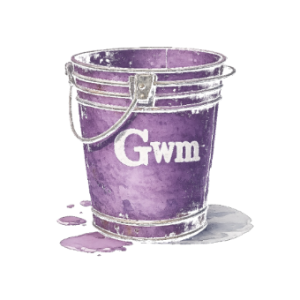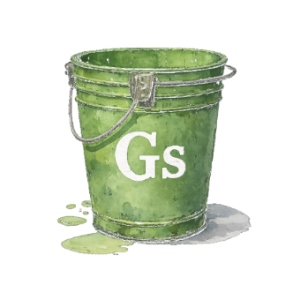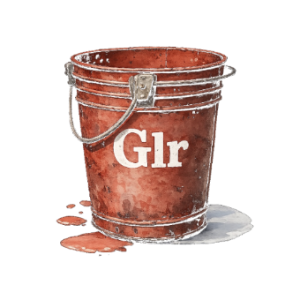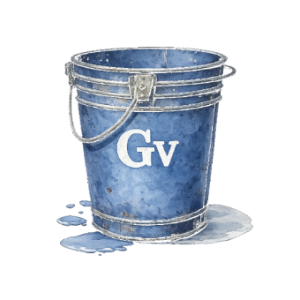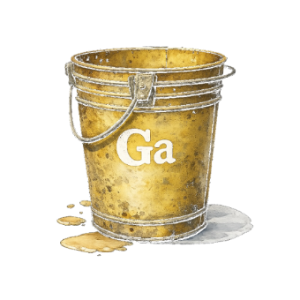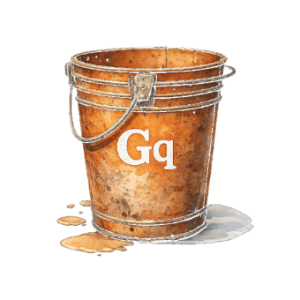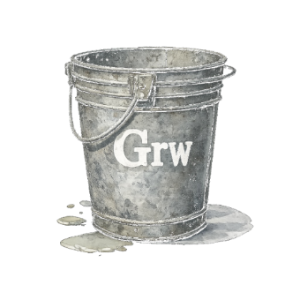
Let’s imagine that the brain, your child’s or your own, is carrying water. Some vessels are full, some run low, and some leak, and nobody gets to choose their fill levels. Once you can see where the water stops, you stop punishing what’s hard and start celebrating what’s strong.

Everyone has G’s. They are as individual as fingerprints, and nobody chose the volume.
Every other vessel leans on these two. When both are full, everything runs smoother. When one runs low, there is struggle. When both run low, the struggle is real, and it shows up early.
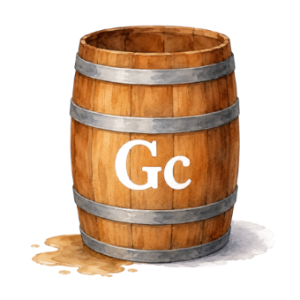
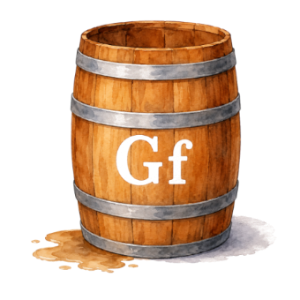
Everything already learned: vocabulary, facts, patterns, and lived experience. A full library connects the past to the present. It doesn’t just know things, it links them. In Bucket Hollow, this is Grandpa’s barrel: “There’s a story behind that.”
The system the brain reaches for when there’s no script, no manual, and no past experience to lean on. It spots patterns, connects dots, and adapts on the fly. In Bucket Hollow, this is Uncle Clue: “Let’s look at the clues.”
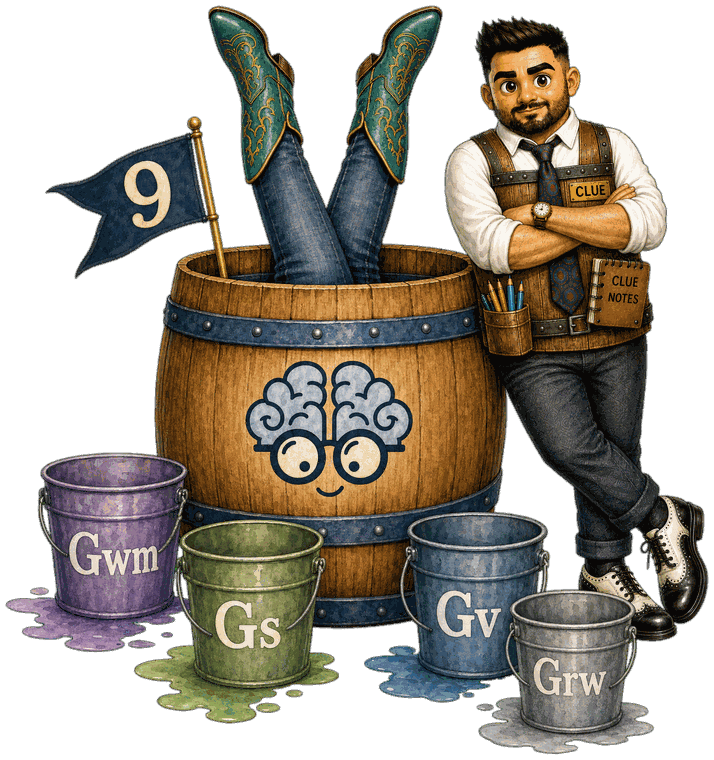
“Let’s understand how the brain works.”
Each bucket handles one specific job. A leak in any one of them changes how school feels, and each leak has its own ramps.
Want the deep dive on each vessel: strengths, leaks, and ramps?
Explore the Cognitive G’sHere is the most important move in the whole system. When a bucket is leaky or running low, the brain quietly borrows capacity from a full barrel to cover the gap. A full library predicts the words a leaky sound sorter didn’t catch. A full figure-it-out system re-derives the math facts a leaky math bucket can’t recall.
That is why a real weakness can stay invisible for years. The child is compensating so well that nobody sees the effort underneath, right up until the academic demand outgrows the barrel’s ability to cover. Then the child who was “fine until this year” suddenly hits a wall: third grade, middle school, or a change of schools.
Recites everything perfectly, until the assignment says “solve it your way” and the memorized scripts run out. A full library covering a leaky figure-it-out system.
Builds, solves, and adapts to anything, then goes silent when the conversation turns wordy. A full figure-it-out system reading the room instead of the words.
Can’t recall 6+7, so the brain figures 6+6=12, plus one. Right answer, triple the fuel, and slow enough to fail the timed test.
A full library predicts words from how sentences flow, until texts get too dense to guess and the decoding gap finally shows.
Narrates their way through anything visual, until geometry proofs and uncaptioned maps can’t be talked through anymore.
Adults say they’re “careful” and “take their time.” Kinder than “lazy,” but it still hides the massive tax they pay on routine work.
The fix is simple to say and powerful to do: watch your child (or yourself) in both scripted and unscripted moments, so you can see how hard the brain is actually working behind the scenes.
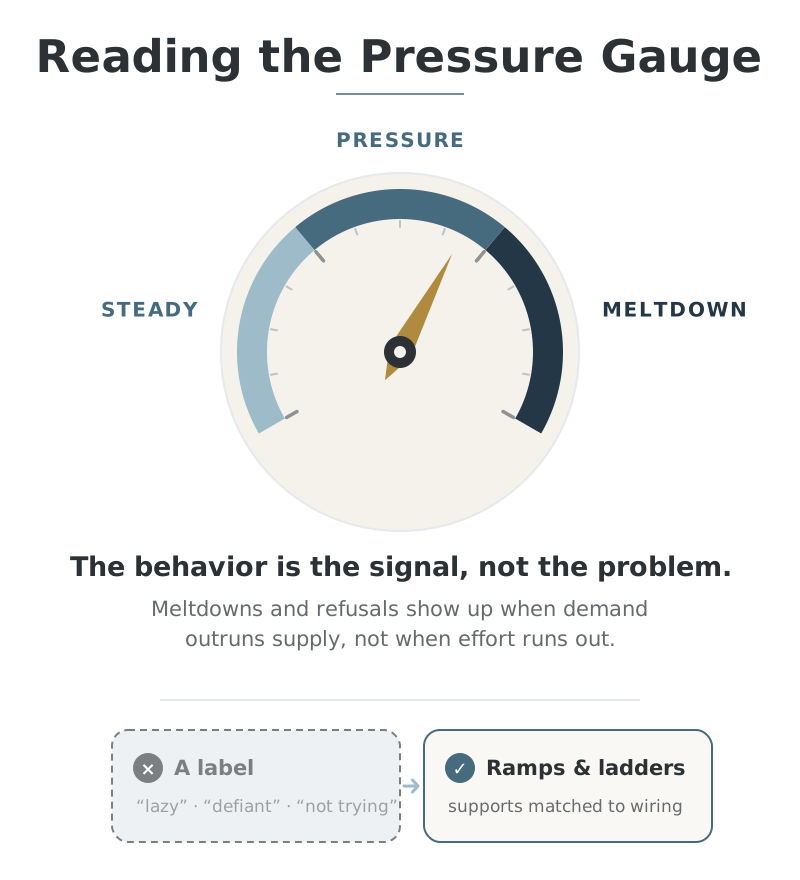
Meltdowns over “easy” homework. Refusing to start. Tears at the kitchen table. Saying “I don’t know” over and over. From the outside it looks like defiance or laziness. It isn’t either one. It’s what happens when the demand outruns the supply and the system overflows.
The behavior is the signal, not the problem. When you read it as a gauge instead of a character flaw, your response changes from correction to connection: reduce the overwhelm, provide a starting point, then step back.
And no one needs a label like “lazy” to get help. They need ramps and ladders, not a label, structural supports matched to their specific wiring, designed to fade as capacity grows.
“Stop punishing what is hard; start celebrating what is strong.”
Take The Fill Finder Questionnaire to generate your Bucket and Barrel Individual Profile, try the Bottleneck Finder to see where the water stops, or meet the characters who make all of this make sense to a child.
“Don’t worry. We’ve climbed into this with you.”