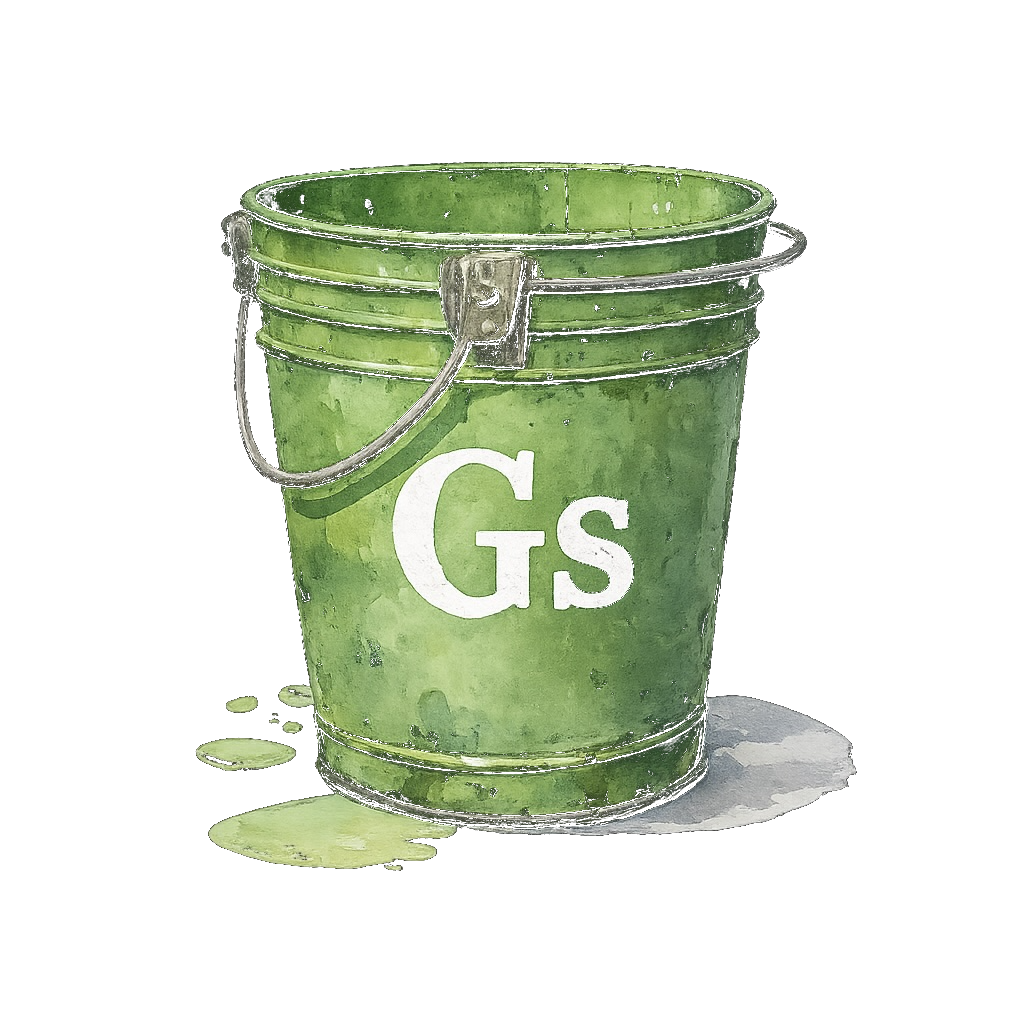
Processing Speed (Gs)
For parents · Essentials: about 2 minutes · Full guide: about 10 minutes
First Clarity Guide? Read the Start Here guide first. It walks through the whole tool.
Your child’s conveyor belt: how quickly and accurately simple, familiar mental work moves through. Processing Speed may be involved in tasks such as scanning, matching, marking, or copying under time demands. It is not intelligence, physical speed, or a measure of everything a child can do.
Do not use the clock as a character judgment. A child may understand a task yet complete fewer simple items within a time limit. That pattern can guide support, but it does not prove a Gs weakness or explain every slow task.
Remove unnecessary time pressure. Give enough time for routines and learning when speed is not the goal. Keep ordinary limits when they serve a clear purpose.
Make a homework plan with the teacher. If homework regularly runs far beyond the expected time, agree on what the child should complete and when the parent should stop and send a note.
Praise accuracy, persistence, and strategy. Notice careful work and useful choices instead of treating speed alone as success.
Patterns you might notice at home ›
A familiar worksheet may take much longer than expected even when the child understands how to do it. Compare similar, routine tasks across days. A complex assignment, a difficult reading passage, or a slow morning can involve many systems besides Gs.
- Simple, familiar paper-and-pencil work may take longer than expected
- Performance may become less accurate when the child feels rushed
- The child may complete fewer items than a peer during the same timed, routine task
- Copying or visually scanning a page may require noticeable effort
- Repetitive written work may leave the child tired or discouraged
- “I’m going as fast as I can.” (Pause and look at the task before deciding what the behavior means.)
- “I didn’t finish.”
- “Why do I always run out of time?”
- “I’m just slow.” (Answer the shame, then examine the pattern.)
Everyday pace can also reflect motor skills, attention, language, sleep, anxiety, executive-function demands, motivation, health, task familiarity, or the directions themselves. These examples are observations, not a diagnosis.
Patterns you might notice at school ›
- Often completes fewer items on simple, familiar written tasks completed under time limits
- Timed fluency activities may underrepresent what the student knows, especially when speed is not the skill being measured
- Work may be accurate but incomplete when the time limit is reached
- Accuracy may decrease when the student is urged to work faster
- Copying or visual scanning may take a large part of the work period
- The student may show fatigue during long, repetitive paper-and-pencil tasks
Slow completion at school may also reflect reading or language difficulty, limited automaticity, handwriting or motor demands, attention, anxiety, vision, fatigue, unfamiliar content, or unclear instruction. Look across tasks and settings, and use evaluation data when a cognitive determination matters.
Before calling it defiance ›
A child who works slowly may be called lazy, unmotivated, or accused of dawdling. Those labels do not explain what happened.
Processing-speed demand is one possibility. Attention, anxiety, fatigue, motor output, language, task difficulty, motivation, and unclear expectations may also affect pace. Time pressure can reduce efficiency without changing the child’s underlying vessel volume.
The behavior is the pressure gauge. When you see stalling, unfinished work, or a strong reaction to “hurry up,” pause before assigning intent. Adjust the demand, offer a clear next step, and notice what changes. A response to support is useful information; it is not a diagnosis.
The emotional impact ›
Repeatedly being compared with faster classmates can make a child feel that careful effort is never enough.
Some children begin calling themselves slow or stupid, rush and make avoidable errors, or stop trying to finish. These reactions are not proof of a Gs weakness, but the shame is real and deserves attention.
Separate pace from worth. Help the child identify which tasks are difficult, use supports that fit the task, and preserve appropriate expectations for learning.
How strengths may support performance ›
Other strengths may help a child demonstrate knowledge through explanation, problem solving, teaching, or a familiar routine. Those strengths can reduce some task demands, but they do not change the child’s Gs vessel volume.
A low score in another area should not be explained away as a processing-speed effect without evidence. Use the child’s stronger vessels when selecting ramps, and rely on a comprehensive evaluation when scores, disability, eligibility, or services matter.
When this bucket is full: the strength side ›
A Processing Speed strength may appear as quick, accurate work on simple, familiar visual or routine cognitive tasks. It does not mean the child is fast at every activity, understands every concept, talks quickly, or moves quickly.
- Works quickly and accurately on familiar scanning, matching, marking, or routine written tasks
- May complete routine classroom work efficiently when the directions and content are understood
- May shift eyes and pencil efficiently across a simple visual task
- May have time left to check work on simple timed tasks
A fast belt moves routine work; it does not deepen understanding. The child who finishes first is not automatically the child who understood best. Do not reward efficient work with more of the same worksheet. Offer depth, teach deliberate checking when needed, and remind children that physical speed and brain speed are different.
- Offer depth instead of extra volume: “You finished. Can you show a second way to solve it?”
- Push back on busywork-as-reward for early finishers
- Teach deliberate checking as a skill, since their instinct is to keep moving
- Build patience and respect for people who work at a different pace
The full home toolkit ›
- Reduce unnecessary time pressure. Preserve time limits that serve safety, scheduling, or an actual learning goal.
- Coordinate a homework plan. Ask the teacher what to complete, how long to work, and how to document unfinished work.
- Build in a practical buffer. If mornings become pressured, prepare clothes and backpacks the night before and identify which step needs support.
- Discuss repetition with the teacher. A shorter assignment may be appropriate when it preserves the instructional target and still provides enough practice or evidence of mastery.
- Praise accuracy, persistence, and strategy. Speed can be acknowledged when it is the skill being practiced, but it should not define the child’s worth.
- Consider another response method. Oral responses or a scribe may help when handwriting speed is not the skill being measured and the teacher agrees.
What might help at school ›
Possible supports to discuss with the student’s team include:
- Extended time when evaluation and classroom data show it is needed for the task
- Reduced repetition when it preserves the instructional target and provides enough practice or evidence of mastery
- Separate content knowledge from speed when speed is not part of the instructional target
- Avoid unnecessary or public timing; use timed practice only when it serves a defined instructional purpose
- Teacher notes, guided notes, or reduced copying when copying is not the skill being measured
- A brief preview or additional response time during fast-paced activities when needed
These are examples, not automatic IEP or Section 504 provisions. Supports must be individualized using evaluation results, classroom performance, instructional need, and progress data.
Advocacy language you can use ›
When talking to your child’s school team, you might say:
“My child often shows stronger understanding when enough time is available. Could we compare accuracy and completion across timed and untimed work?”
“When speed is not the skill being measured, what support would let my child show the intended knowledge or skill?”
“Evaluation and classroom data indicate that the student completes fewer items on simple, familiar tasks under standard time limits while maintaining stronger accuracy when appropriate time is available. The team should consider task-specific extended time, reduced copying or repetition when it does not alter the instructional target, and a method for monitoring effectiveness.”
The student’s team must decide whether an accommodation is needed and how it should be written. A Gs score alone does not determine eligibility, services, or accommodations.
Technology that may help ›
- Speech-to-text: may reduce handwriting demand when written mechanics are not the target
- Typing after keyboarding instruction: may provide a more efficient response method for some students
- Photograph instructions when school rules permit: reduces copying and provides a reference
- Audiobooks with text: may reduce decoding demand when appropriate; this support is not specific to Gs
- Timers used for planning: show work and break periods without turning the task into a race
- Teacher-shared digital notes: reduce copying when copying is not the learning goal
Technology should match the learner, the task, and the instructional goal. It supports access; it does not diagnose or change Gs.
You might have this too ›
If these struggles sound familiar, you may already build in extra time, choose quieter work periods, or use technology to reduce output demands. Similar experiences can build empathy, but they do not establish your Gs level or your child’s.
Notice which supports help and which tasks remain difficult. That experience can help you ask better questions without assuming that you and your child have the same profile.
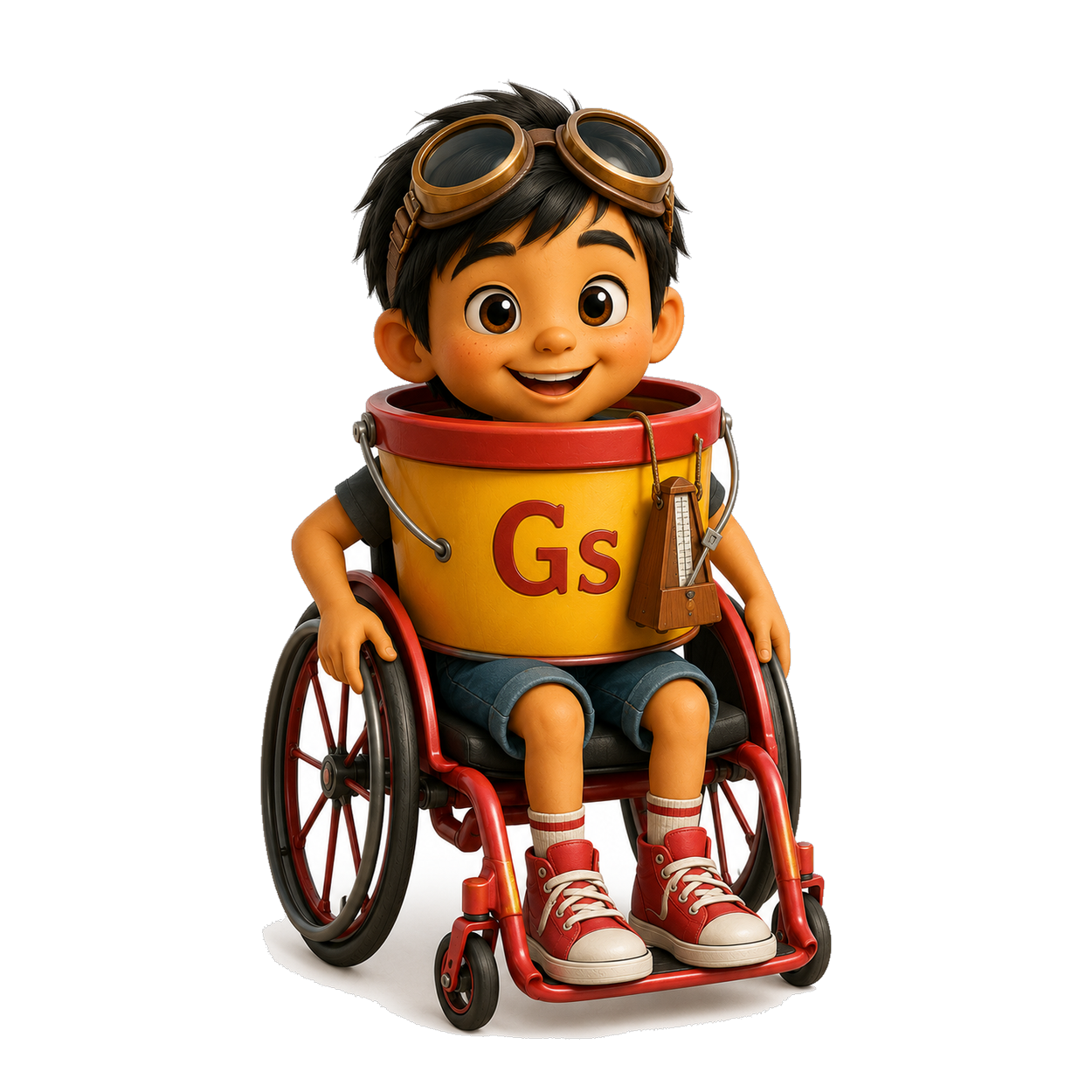
You now have a plain-language way to talk about Gs. Tempo the Cognitive Speed Bucket is the Bucket Hollow friend who uses a wheelchair and has a rhythm all his own. His chair helps make an important point: Processing Speed is brain speed, not physical speed. Tempo gives children a character they can root for without turning the character, or this guide, into a diagnosis.
“Ready, set, go!”
Your child is not lazy. Not broken. They may need time used differently.
Time demands can hide what a child understands. Match the support to the task, watch what changes, and seek a comprehensive evaluation when concerns persist. Ramps and ladders, not a label.
Take the Fill Finder Questionnaire to get your child’s Buckets and Barrels™ Individual Profile. Every bucket has its own Clarity Guide.
Start the Fill Finder →This guide is an educational tool. It does not diagnose a condition, estimate a cognitive-test score, replace a comprehensive evaluation, or determine IDEA or Section 504 eligibility, services, or accommodations. Supports must be individualized using evaluation results, classroom performance, instructional need, and progress data.
Still concerned? A parent may request a special-education evaluation from the local school district. In Texas, a written request sent to the director of special education or another district administrative employee generally requires a district response within 15 school days. If the parent gives written consent and the district evaluates, the evaluation report is generally due within 45 school days, subject to state rules and exceptions. Timelines vary by state.